
This blog post no longer exists.
Blog and Shop
-
Shepherds and Fields, Flocks and Grains
We all need bread. Where are you getting yours?
“Mary was greatly troubled at his words and wondered what kind of greeting this might be. But the angel said to her, “Do not be afraid, Mary; you have found favor with God. You will conceive and give birth to a son, and you are to call him Jesus. He will be great and will be called the Son of the Most High. The Lord God will give him the throne of his father David, and he will reign over Jacob’s descendants forever; his kingdom will never end.” “How will this be,” Mary asked the angel, “since I am a virgin?” The angel answered, “The Holy Spirit will come on you, and the power of the Most High will overshadow you. So the holy one to be born will be called the Son of God.” Luke 1:29-35
Jesus was born of the Virgin Mary and then placed in a manger. A trough for livestock to eat from, something so close to the ground, not glorious, and likely not very clean. God chose to be born like every man is, from a woman, and entered the world as an infant. He did not have the riches that many of us have. He didn’t have a stroller, mattress, or cute baby photos parents like to hold onto. He couldn’t even talk yet. He had a loving family and a loving Father. But he was born in a low place that sheep, goats, and cattle would’ve eaten out of. That might not seem like the ideal place for the Son of God to be born, but it had a divine purpose.
I can’t stop thinking about the fact that Jesus chose to be born and placed in a manger. This relates directly to so many things Jesus says throughout His life. He is the Good Shepherd, the spotless Lamb of God, the Bread of life… Even His entry into this world shows us exactly who He is to us. He was placed low, laid down for us, sacrificing Himself so we could have life. How significant is it that the God of the universe decided to be food for His sheep even from His first moments of life?
Not only that, Bethlehem, the place of Jesus’ birth, can be translated to “The Place of Bread”. So the Bread of Life was laid in a manger for His sheep—in the Place of Bread—to become food for the souls of His followers. How miraculous that God would orchestrate such a beautiful thing to happen. Scripture is full of this idea being planned and later fleshed out by Jesus, Old Testament and New. From the first moment of Jesus’ life, God entered the world to feed His sheep, both physically and spiritually.
When Jesus came as a child in a manger, He did it in the way that, through prophecy in the Old Testament, people would find Him. People who were searching for a king and the Messiah. There is plenty of prophecy that speaks of Jesus’ birth. Genesis 49:10, Numbers 24, and Daniel 2 and 9 point us to the birth of Jesus. Daniel 9:25 lays out the exact time it would take for the “anointed prince” would come to rebuild and restore Jerusalem. It shows that it would take 483 years from the walls of Jerusalem being rebuilt in 445 BC for the Messiah to come. And Jesus rode into Jerusalem at the EXACT time prophesied, not early or late, at AD 33.
That announcement confirmed his Messianic position. If Jesus were born a year earlier or later than when He was, or announced Himself earlier than He did, then the prophecy would not be valid. Because of God’s perfect, divine timing, that prophecy brings substantial credibility to the idea of Jesus being the Messiah by the actual day and year He was born and named King. His birth marks the exact day the Messiah was brought into the world. His birth had such a great purpose, and His presence was prophesied hundreds of years before He came. This makes His entry into the world that much sweeter.
The Christmas story tells us that Jesus revealed Himself first to the shepherds. He also calls us His sheep. I love comparing us to sheep since Jesus does the same thing. Because of the way Jesus entered into the world, it had me thinking about shepherds and fields, flocks and grains.
“Acknowledge that the LORD is God! He made us, and we are his. We are his people, the sheep of his pasture.” Psalm 100:3 NLT
“He tends his flock like a shepherd: He gathers the lambs in his arms and carries them close to his heart; He gently leads those that have young.” Isaiah 40:11 NIV
“The LORD is my shepherd, I lack nothing. He makes me lie down in green pastures, he leads me beside quiet waters, he refreshes my soul. He guides me along the right paths for his name’s sake.” Psalm 23:1-3 NIV
“I am the good shepherd. The good shepherd lays down his life for the sheep. The hired hand is not the shepherd and does not own the sheep. So when he sees the wolf coming, he abandons the sheep and runs away. Then the wolf attacks the flock and scatters it. The man runs away because he is a hired hand and cares nothing for the sheep. “I am the good shepherd; I know my sheep and my sheep know me— just as the Father knows me and I know the Father—and I lay down my life for the sheep. John 10:11-15
“Therefore Jesus said again, “Very truly I tell you, I am the gate for the sheep. All who have come before me are thieves and robbers, but the sheep have not listened to them. I am the gate; whoever enters through me will be saved…” John 10:7-9 NIV
“If a man has a hundred sheep and one of them wanders away, what will he do? Won’t he leave the ninety-nine others on the hills and go out to search for the one that is lost? And if he finds it, I tell you the truth, he will rejoice over it more than over the ninety-nine that didn’t wander away! In the same way, it is not my heavenly Father’s will that even one of these little ones should perish.” Matthew 18:12-14 NIV
“It was the precious blood of Christ, the sinless, spotless Lamb of God.” 1 Peter 1:19 NLT
Even John 10:27 expands, “My sheep listen to my voice; I know them, and they follow me.”
The use of sheep analogies in the Bible is not an accident; God is very intentional with His symbolism and comparisons. We are just like sheep. Helpless, we need a leader because we wander off. We need community, water, and grains to live. We respond to voices we know, and we need to be taken care of. Jesus calls Himself a shepherd, which can point to His genealogy, as David was also a shepherd who paid close attention to his flock. Jesus says He leaves the 99 for the one, something I have experienced myself. When our loving God speaks, it is intentional.
He says He calls us by name and we know His voice. That is not just physical, but when Jesus calls us, our spirit recognises that He is the Son of God. Just like shepherds are the only way for sheep to live, Jesus is the only way to eternal life. A shepherd doesn’t get angry that his sheep depend on him, but he expects it. God tells us to follow Him and His commands because of His knowledge and love for us. He is our good shepherd and I trust Him to guide me.
This shows that God, as our shepherd, knows us by name, calls on us and we follow him. Did you know that sheep also know their own names? When their shepherd calls them, they listen and actually recognise the voice of their shepherd. That is the voice of safety, the voice that knows how to protect and where to find food and water. That voice comforts them and assures them that they will be taken care of. We are not simply followers of a god, but of the only true and living God. The one who knows our name and knows every hair on our heads, and who has great plans for our lives.
I will never look at the manger the same. It is more than a feeding trough, but the place my Savior lay. He became the food for His flock for us, by laying down His life, spilling His blood for sins that weren’t His to begin with. Historically, the manger was most likely stone, reflecting Jesus as the Rock of Ages, our cornerstone, and the foundation of life. From His first moments, even the rocks cried out that He is God. His tomb, also carved from stone, would later prove unable to hold Him.
The Christmas story resonates so deeply; it is within us and is the true reason to celebrate this season. God made His presence known to the lowly; He lay in a manger and rescued us from our sins. He became bread for our spirit when he was laid in that manger. His word is our daily bread, and He is the Word; the true embodiment of God’s divine will. He bridges the gap between sin and eternal life. His forgiveness cleanses every wound, every dark thing, and all sin. His words can pull us out of any darkness we experience. Jesus is the only way to eternal life, and His birth story is just one of many beautiful testaments to His life. I pray you are blessed with His presence this Christmas; it is the only thing our souls can truly look forward to.

Screenshot -
Dangers of Lust Pt.1

Subscribe to continue reading
Subscribe to get access to the rest of this post and other subscriber-only content.
Subscribe to continue reading
Subscribe to get access to the rest of this post and other subscriber-only content.
What is an American School?

I always hated the thought of being a teacher growing up. I told myself I would never become a teacher because they aren’t treated well or paid enough, yet I find myself in positions to teach constantly. At every job I’ve had, it has taken about 2 months, and I start training new people. My first job after moving out at 18 was teaching in daycare. Once I found God and began attending church in my hometown, I taught Sunday school and Wednesday night classes. I always end up loving it despite my preconception of the job.
I recently started subbing for a high school, and once again, despite warnings about the struggles of this job, I love it. I love the kids and want them to do well and enjoy a prosperous life. I have so many thoughts about this new job. I do not care about how much I’m getting paid. Being with kids and teaching them is the most rewarding job to me. Of course, I want to make an adult amount of money and make enough to save and for bills, extra for things I want, but I would do this work for free if I could. Funny how things change.
Because of this new experience, I am realizing all sorts of new things about myself. I love to teach, I love education, I love community, and people need so much more love. But just being nice will not help as much as love and discipline can.
Proverbs 22:15 says, “Foolishness is bound up in the heart of a child;
The rod of discipline will remove it far from him.”
And Proverbs 29:15 says, “The rod and reproof give wisdom,
But a child who gets his own way brings shame to his mother.”
The journey of becoming a Christian has shown me new ways to live my life. Teaching helps me see where I lack, and quickly. I know now I need to become less reactive and more proactive. I need to bring discipline to my teaching, or else they will not find a way to respect me. But growing up with an abusive family, I have always been softer to people. I give mass amounts of grace and mercy, and I’m learning not to give too much. That is another reason I love subbing. I get to learn how to improve in multiple areas of my life while helping fill holes in my community. God blessed me with this opportunity, and now with the knowledge of what direction I would like to take my career.
I have many wonderful things to say about my newfound love, but oh, the troubles it comes with as well. I have never seen high school the way I see it now. I have only had this job for a short time, and already I have learned things about teenagers that I never knew, and never wanted to. And it has led me down the rabbit hole about Generation Alpha.
For many reasons, this generation is very different from mine, Generation Z. And yes, I recognize the problems within my peers, but that is a separate conversation. Gen A may be close in age, but much different in approach and experience. I love the kids I teach, but because of my love for them, I also see the deep-seated problems in the classroom. Do we blame covid for the lack of attention these children receive at home? I was a teenager during covid and yes it sucked, but it only gave my parents all the more time to pay attention to my siblings and I. And I don’t know that I feel specifically neglected because of the pandemic, but that is a question I would like to have an answer for. I know through studies I found my senior year that teenagers were using more substances during covid, and felt more responsibility at a younger age. Asking people around me, I have heard stories about how children during the pandemic have changed completely and not necessarily for the better.
Of course, I do not have any children and do not know what it is like to be younger and go through covid during elementary school, and I’m sure the shift in childhood experiences must have been extreme. Going from blowing bubbles outside with friends, barbeques with family, and constant sleepovers to quarantined and alone has to do something detrimental to the developing brain. I know we all feel lonelier than ever, regardless of the sources we blame.
People thrive in community. Multiple cultures are seen to value it more than America tends to, and you see the difference in their anxiety and depression rates. It is harder to feel the weight of the world when multiple people are carrying it with you. Even in the Bible, Jesus speaks on the importance of communion with the body of Christ, and he is a great example of healthy living. He was always finding time for friends, the poor, children, and those in need. He knew the right balance of social and private life.
So there are multiple possibilities for this neglected generation. Reasons that these kids are left to their own devices, video games, and to themselves. Loneliness kills ,and you can ask just about anyone and get a similar response: people don’t like being alone all the time. So many students have told me things that are concerning about the state of the American home. They often joke about their abusive and alcoholic parents, complain about going home, beg to stay at school, and as a whole, have repeatedly said “They won’t care” when I mention telling their parents something important about them or their education.
Whatever the reason, these kids are struggling. I cannot stand the constant blame on the teachers and the school system. I do my best to see both sides of every story, and in public school, teachers are not meant to be parents. Parents who do less than the bare minimum cannot blame teachers for simply doing a very difficult job. Every teacher has flaws, and every parent, as well as the students themselves. But each person in this system plays an important role.
The notion that parents are paying the teachers’ salaries is an entitled one I am tired of hearing. We all pay our taxes and expect them to be used wisely, but that does not mean we should go around telling people how to do their government jobs. Teachers need more support than ever, teaching in a time where technology and the students are constantly changing with the culture. Responsibility for teachers is greater while their pay stays the same. They are dealing with an indifferent spirit in the children, where they can not be convinced to care about anything.
In the same breath, the students are expected to do a normal amount of work with even less support than the generation before them… or too much support. “Gentle parenting” has become a new joke among Gen Z to highlight the lack of responsibility for the parents of Gen A. Many parents are neglecting discipline for their children under the guise of “gentle parenting”. The notion in itself is not necessarily bad, but the idea that letting children determine right from wrong and their own punishments is a whole world of wrong. Children need parents to guide and lead them, not protect them from every uncomfortable situation the world has to offer. They avoid any growth in the same way they can scroll away from any uncomfortable thing on their phones. This is an easy way to hide from actual parenting skills like setting boundaries and limits, things that children desperately need. Without proper guidance, attention, and limits, these students are becoming increasingly addicted to their phones, vulgar with their peers, and careless with their actions.
Every person in a community needs to step up to help solve this issue. Parents need to pay close attention to their children to know what their child is going through, teachers need support and to do the best they can at their jobs, students need to hold themselves accountable and help their peers do the same, and community members need to be willing to share and help when called upon. Teachers need to communicate with parents, and parents need to know their child well enough to see when they are struggling. We all want to see Generation A prosper in knowledge, skills, and in life. We all have ways to help accomplish that.
I know what it’s like to be the stressed student, the overwhelmed teacher, and I have seen many stressed parents. I know we are all under a lot of pressure to be better, hustle, pay bills, be extraordinary, but when we focus on the small details when it comes to the upcoming generation, it will take a lot off of our shoulders. Our relationships can be symbiotic; we can help each other thrive. Thank you for reading this far, and please, if you have any perspective or insight on this issue, comment on this blog to be a part of the conversation. This may not be my last post on this topic, so know that there is more to be said and more action to be taken. Do your part where you are, and notice the difference in the people around you.
Why Share the Gospel? A Personal Reflection
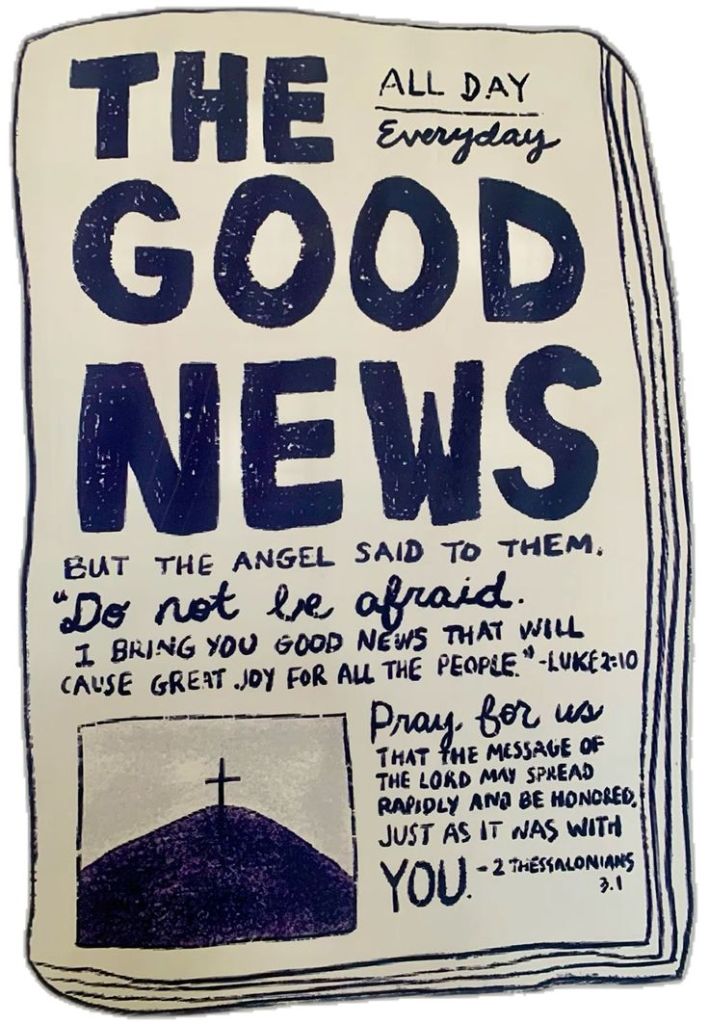
We all need Jesus
Sometimes I wonder why it’s so important to share the gospel. How silly, now writing it out, because we all NEED the gospel, we need Jesus. I know I was wicked before knowing Jesus, and I am saved for eternity with him and only because of his sacrifice. And I love telling people about Jesus! I realize now that there are people who grew up or are growing up in environments where they don’t have that Christian mom or grandma to drag them to church. Some people grow up in cults, in witchcraft or paganism, as Buddhists or Muslims. Not everyone has heard the gospel as soon as they need to from people who love Jesus, who have been called to spread the good news to the whole earth.
Growing up “Perfect” and Spiritually Blind
Growing up, I was called “perfect”. It bothered me and put this heavy responsibility on my shoulders, and I didn’t understand that I could be a sinner, too. Ignorance is bliss, and I was just living my little kid life. I was unaware of the ways I was sinful, at least in a way where I felt condemned. I didn’t feel strong urges to do terrible things because I knew it was bad and I would get in trouble. At Sunday school, they told us that when we break one of the 10 commandments, we are sinning, or ignore what God wants, we are sinners. I knew that, technically, and I didn’t forget it. I just didn’t have the fear of God in me yet. Part of it was my faith in God; I knew he always had my back, so I didn’t worry much about the details. Part of this problem was that I didn’t notice my sins, or even see those sinful behaviors as bad. For example, fighting with my siblings or not doing what my parent had asked me. Or judging others, especially for things I also did. Many people are blissfully unaware of what a true moral code is, the one that the God of Jacob and Jesus laid out for us in the Holy Bible. Some people still do not know why Jesus died, that he is 100% God and man, or that he is the fulfillment of over 300 prophecies in the Old Testament. I hope to help change that.
The Gospel Through the Lens of History
In the first few chapters of Genesis, we instantly see how easily humanity falls into sin. Further on, we read about how God made laws for his people; they fell away, came back to God, and marched through this cycle continuously. We then see how prophets and leaders are sent to inspire change in the people, and how they were often killed for being different. We see how people born hundreds of years before Jesus describe him perfectly in prophecy without knowing what they did. We see cross-references and the breath of God himself blown onto thousands of pages, proof among proof that God is real and he does talk to us.
We see how the world comes to a precipice in the Roman Empire and how radical a simple carpenter with wise words rocks their world. We can start to wonder, even just historically, why God would send such a Son at a time like that? As a man with no honor, a prophet with no money, a leader with no title, yet people have debated for thousands of years whether he was truly God. If we could prove this historical carpenter was just a man, how is it that we still talk about it? His name is still on our lips. So yes, Jesus is a household name, but do we truly know him? Do we know he is God, sent to die for our sins, and we are wretched sinners? I think our culture is blinded by our sins, and I know the love of Jesus is the only cure.
I Need Jesus, too
Even I, as a Christian, have to remind myself daily of the gospel. It took almost a year for me to stop feeling so guilty for not being perfect, and that feeling can come back. We have all sinned and fallen short of the glory of God. The problem I am witnessing is that we have become desensitized to the wicked and ugly things in life. Culture relies on what brings pleasure, not goodness. Morals aren’t popular, and neither is living biblically. Christian behavior is partially the blame. The quote “No hate like Christian love” is wildly popular and for a reason. The same reason I left the church at 17. Not all Christians are aware of themselves and how they can hurt other people with their judgments and words. It is not our place to play God and pretend we know other people’s hearts. I wish we would live up to the commandment to love one another as Jesus loves us. I know the world would be easier to live in.
Thank God I Went Through Hell
The gospel should be so simple to tell others, and it is. Experience trumps knowledge, and that makes me so thankful I went through hell before finding Jesus. When I did finally come back to the faith, I finally had the fear of God in me. I understood that he is all-powerful, knows everything, and still chooses to love me. He gave me mercy after all the bad things I’ve done, and it is terrifying to think I could’ve lost that love. I could have gone to hell living the life I chose. I did all the things I wanted to do, gave in to my flesh at every turn and my desires became my gods. I am beyond thankful that Jesus pursued me and granted me access to the most beautiful and fulfilling life yet. I get eternal life because Jesus never gave up on me.
The Truth that We Need is Sugar-Free
I recently had the opportunity to share the gospel with someone online, and they asked questions, and I answered based on my knowledge and experience. This person had gone through horrible things in their childhood, and they wanted to know why a good and faithful God of everything would allow that to happen. I used to ask those questions, too, so I understood. They wanted to know if sinners could go to church as well, and I told them that I did, and I still am a sinner. We all fall short, and that’s why we need Jesus. He loved us, so we can love him. He died for us so we can live. He is all that we will ever need, and it is the greatest gift of life. Something so good should be shared with everyone. I am so glad I went through some similar rough times so I could relate the gospel to someone who needed to hear it real and blunt. I didn’t sugarcoat anything because the truth doesn’t need sugar. The gospel stands strong all on its own.
Shame and guilt will pull us away from God, and the enemy loves to use those to hurt us. When we bring our burdens to a God who loves us, we are renewed and get restored strength. I want everyone to have the opportunity to have that comfort in this life, and the insurance that we will be with Jesus in heaven for eternity. My life has had many challenges since finding Jesus, but it has never been easier. I have someone to walk through life with me, to guide and comfort me in good and bad times, and I wouldn’t trade that for anything. I used to be completely alone, I did anything I wanted, but I was scared and lonely. Now, even in the darkest alleys and loneliest places, I have a God who is my friend, my savior, my husband, and my life.
Share The Good Gift!
I think it can be used for good to know that we fall short of the glory of God. I like knowing that I can and need to do better. It keeps me close to God. If you get that pull from the Holy Spirit that someone you know could benefit from hearing the gospel from you, let God use you and bring that person to salvation. It’s the least we can do. We can depend on his perfection in everything. We can rest knowing he has everything under control. We fall short, but the love of Jesus fills that gap perfectly.
Crochet Course | Learn Crochet Quickly
It’s official…
After many hours of hard work, writing, proofing, and re-reading, the Crochet Course from BusyVandCo is done! Once you select the tier 1 Crochet Course for $3 below this article, you will receive the BusyVandCo Crochet Course!
If you want to learn crochet and prefer advice from an experienced crocheter, I have just what you need! For $3, you can receive the whole BusyVandCo Crochet Course right to your device. Print off for easy reading, reference the course when you’re stuck, and ultimately learn a new skill you will enjoy for the rest of your life! It comes with guides, pictures, a vocabulary, a glossary, and a short quiz to help you and test your knowledge. Everything you need to start crocheting is in one place, and can be yours forever!
Learning a new skill like crochet can be intimidating, so I wrote an all-inclusive Crochet Course for beginners. With all the information you need to begin crocheting, you will be making your favorite fiber art in no time. It is all about doing things the right way, and your way. With no hard rules, only guidelines to make you a better artist overall, you will love learning how to crochet.
When you buy this course, you’re doing more than just learning crochet. You are helping put a young woman through college to become a secondary educator, something this world needs more of. We are nothing without our education system and teachers, and buying this course helps me pursue my dreams of being an artist and a support system for my community.
I hope this community continues to grow and advance into a bright future of creative education. Thank you for sharing your love for learning a new skill!
Copyright BusyVandCo 2025.
Subscribe to get access to the Crochet Course!
Get your beginner crochet course for $3 today!

A Girl in the Mountains
Living secluded is a tricky thing. In Idaho, it can be more common than not.

I live where there are mountains and valleys with no neighbors for miles. There is an easy entry into manipulation and abuse when isolated. For example, in the wild, many predators lure their prey where no one else can see it. I know what that’s like.
I loved the mountain at my childhood home—plenty of pine trees for forts and rocks for jumping on. I had a whole pretend life on that mountain; its steep sides made it a challenge for little me. Juneberries blossomed and ripened around every corner, making the perfect snack in the summer. I had a kitchen, dining room, garden, and workshop in those trees. The large black rock I would climb on to read and write was a landmark to that hill. Often, I was driven outside in tears over my Dad’s yelling or parents’ arguing and outbursts, and my dog would meet me on that big rock. He was always there for me in the worst times, he knew when I was not okay.
I felt alone a lot as a kid, even with a big family in a small town. I read many books, had crafting hobbies like weaving and crochet, and loved getting muddy outdoors. I was timid and afraid of getting hurt, and worse, I was terrified of getting in trouble. The eldest daughter has a lot on her shoulders, and I was determined to save the world somehow. But I was content with the idea of really helping at least one person.
At first, I enjoyed my alone time. There was no stress, freedom in the fresh air, and no one to yell at me. I would talk to God or my dog and write in my journal endlessly. I was creative and energetic, so I always had something to do. I can say I am generally about the same now. Just as I was then, I am a particularly emotional person. Not in a reactive way, but in a very internalized manner. I have had a habit since childhood of not speaking unless I had to. I just observed and took mental notes. I’m sure it comes from a fear of getting in trouble or being targeted, and especially a fear of being ignored. I had a sense that if no one wanted to listen, I then have nothing to say. I was worried I was a burden to my family, and if I had nothing good to say, then I wouldn’t say anything. Habits like that were so common for me to continue as I grew up. I wanted to be invisible, out of the way, and not a burden to anyone. I desired more than anything to make my parents’ lives easier and for them to love me.
I think God made mountains for such beautiful reasons. I know the mountains have healed things in me, even though they can’t talk. Living in multiple different states, I felt sick without the mountains. The thrill of climbing them, the way they grow out of the horizon in sunset lighting, the trees and animals that they home. I have always and will always love mountains. They are difficult too. They require tough treks, good shoes, stamina, and determination to get to the top (and even some bravery coming down). Moses took adventures to the tops of mountains to speak to God; the theme of spiritual journeys to mountains is common in the Bible. From Noah’s Ark to The Sermon on the Mount, mountains play a big role in the ways of humanity and our relationship with God. I am so thankful and blessed that God allowed me to be surrounded by them, for the ability to climb them and simply see them with my own eyes.
When I was 18 and moved out of the house, I started giving myself stick-and-poke tattoos. I started with a bee on my knee, which is now my business logo, and then a heart on my sleeve. I added mountains inside the heart because to me, that’s where the mountains will always be. I had a lot of fun in my childhood climbing up the rough ridges and hills along my family’s property. As an Idaho kid, scraping your knees on rocks and getting covered in dirt was normal. There’s a good reason I don’t wear a lot of white…
God speaks to me on the mountains. Not loud and bright like in Moses’ story, but gently and kindly like a good Father does to his daughter. He would enter into my imaginary worlds and guide me to better choices. There were some rough days in the mountains. One particular day, I tried to take my life, but God had much better plans for me. I ate plants that weren’t edible in hopes I would slowly die, and my parents would finally pay attention to me. Thank God for his sovereignty and ways, that I was not even sick or close to dying. I just had every intention of letting go. I thought the world would be better off without me.
Turns out, you can’t help people by taking your own life. And then you’ll miss out on all the mountains God wants you to climb. I will ask you to do one thing for me since you’ve read this far. If you see or sense abuse, don’t keep quiet. Speak about it until something changes. Be there for the people you know have a lot going on, and especially those who seem to always be happy and have everything together. We don’t know the mountains of pain that can hide behind someone’s big smile.
I know from living in a small town that a lot of abuse gets overlooked. “Jimmy doesn’t get beat, so it can’t be that bad” type of mindsets are common. 78% of abuse is neglect, and studies have shown that if babies are left alone with no love and attention, they die. It is important to keep an eye out for different behaviors like drug use, isolation, and depression, because they can be signs of abuse. April is Child Abuse Prevention Month. To show your support for the children being abused, please talk to your friends, family, and community members and educate each other on the dangers of abuse. Thank you for reading, and remember God is with you and loves you more than life itself.
Welcome Spa Bundles!
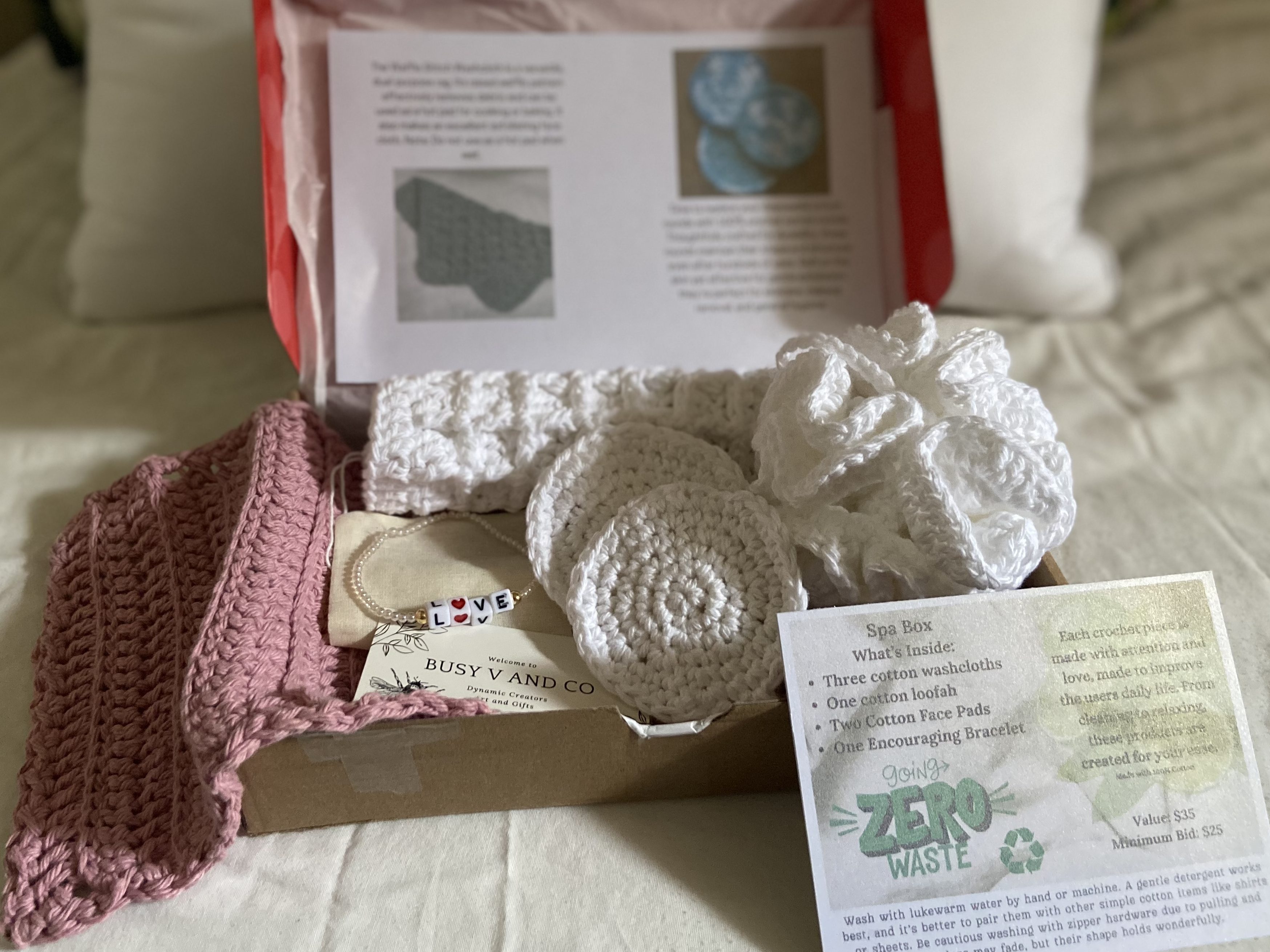
I’ve observed a need for high-quality bathroom necessities like washcloths, loofahs, and face pads (cotton rounds).
In the past 6 months, I’ve been creating crochet cotton face pads for cleansing and skin care. They have helped people in my community switch to a low-waste alternative and provided great gifts for their friends and family. After getting a rush of orders for those face pads, I have started making more bathroom products to help people transition to a zero/no-waste lifestyle. These products also support me in my education as my goal by the end of the year is to continue college to become a high school teacher.
There are so many actions we can take to help the future of our children and nation; education and lifestyle choices play huge roles in the outcome of the country and the world. We need teachers who care about their job and kids, and we need to be intentional about how we consume as Americans. Buying from a local small business like BusyVandCo supports someone who wants to further their education and those of a small community, as well as brings you well-made products meant to last you years rather than moments.
Currently, the spa bundles contain three different washcloths, two face pads, one loofah, and one encouraging bracelet. Washing instructions come with each bundle, along with a description of the products so you know exactly what you’re purchasing and why. Every bundle can be made with custom colors, either monochrome or a color scheme.
$25 + shipping. Local pickup and drop off are free.
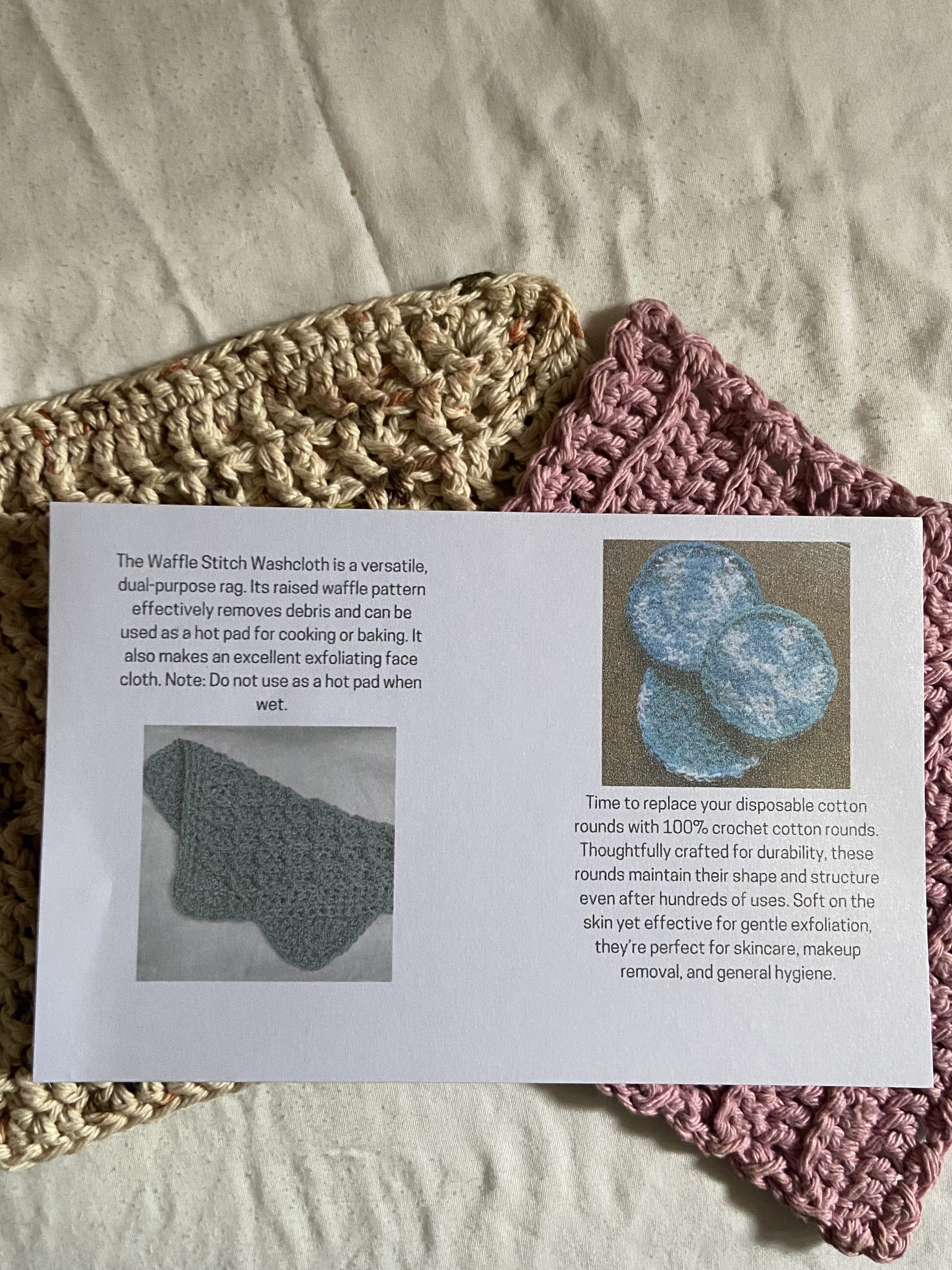
As time continues, the bundles will evolve for different needs in the community, like teenage skincare bundles, kid bathtub bundles, bulk spa bundles, and so on.
I am so happy to have made something I know can brighten someone’s day and life when they receive their package. I hope the love for a low-waste lifestyle grows as people become more aware of their consumption and how it affects our ecosystem.
Give a good gift, treat yourself to affordable luxury, and help a young college student become a teacher with BusyVandCo’s Spa Bundles!
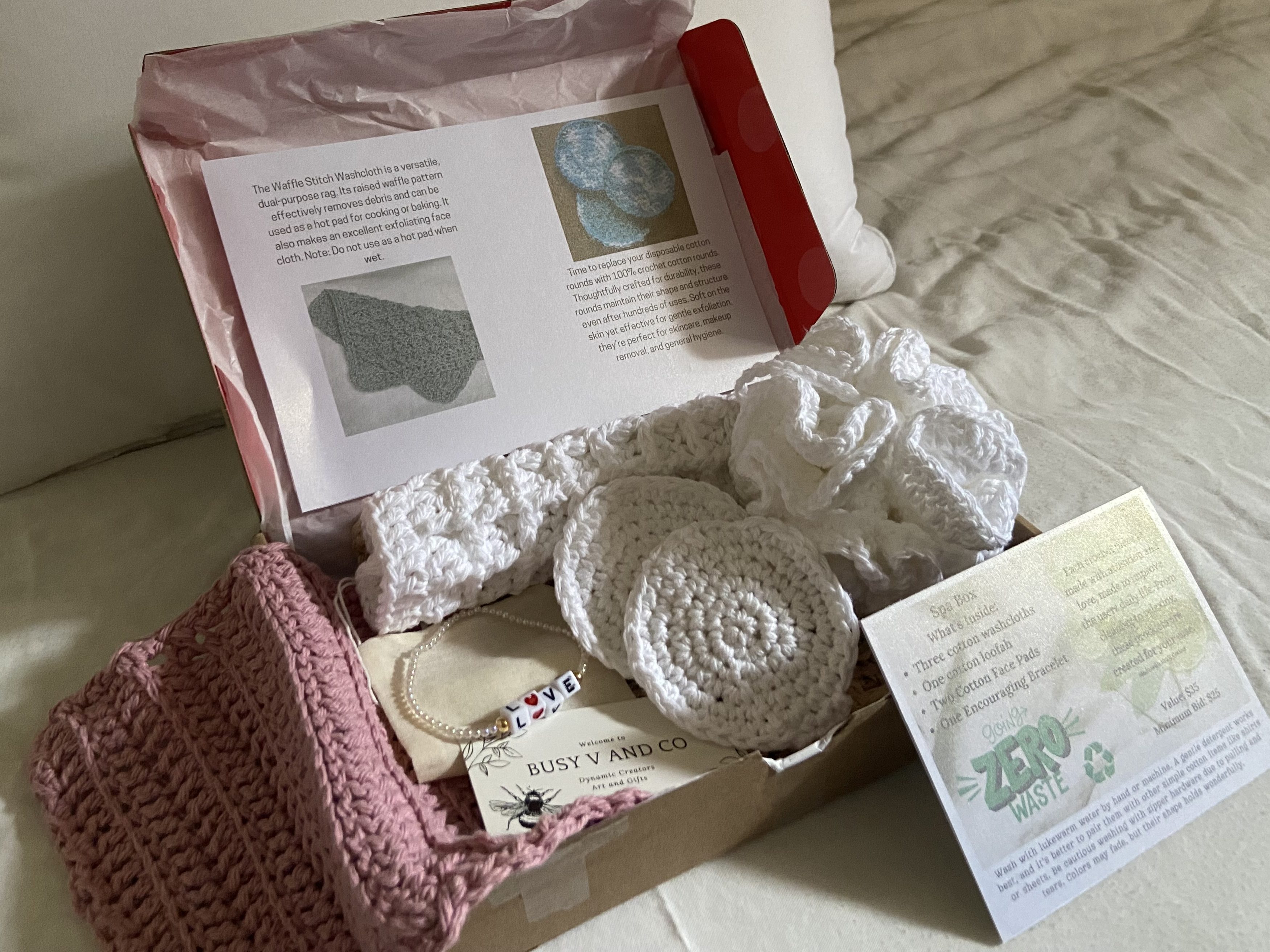
Thank you for reading this far. Your support means a lot to me and helps me more than you know.
The Story of Ruth
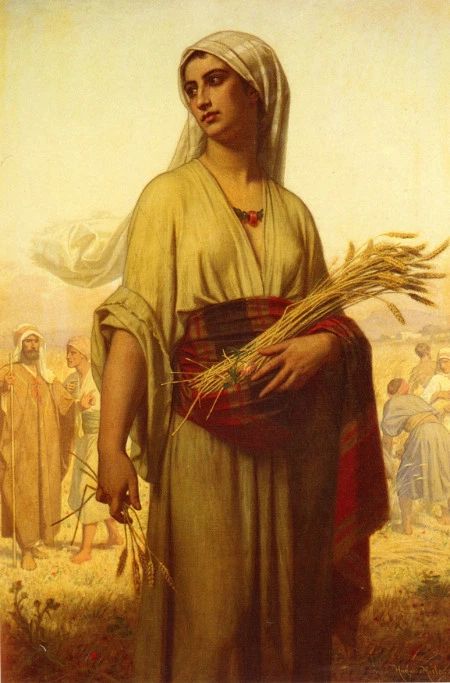
I love the story of Ruth. The short book in the bible about a heartbreaking story that turned glorious thanks to God is one of my favorites. I love how Ruth loves. If you put yourself in her shoes it would be difficult to do what she did, leaving her life to care for her mother-in-law. Usually, that relationship is strained, but Ruth defies all typical situations in this story.
If you don’t know this story it starts with a famine and Ruth, her husband, Naomi, her other son and daughter-in-law, and Naomi’s husband. All three husbands die and they set out for land the Lord has favored. Naomi told her daughters-in-law that they could now depart to their lands since they were foreigners and their husbands had died. Ruth decided to stay with Naomi, and her loyalty preceded her. In this culture when a woman was without a husband it was challenging for them to survive physically and socially. It would be easier for Ruth to go to her homeland and find a new husband, but family was important to her.
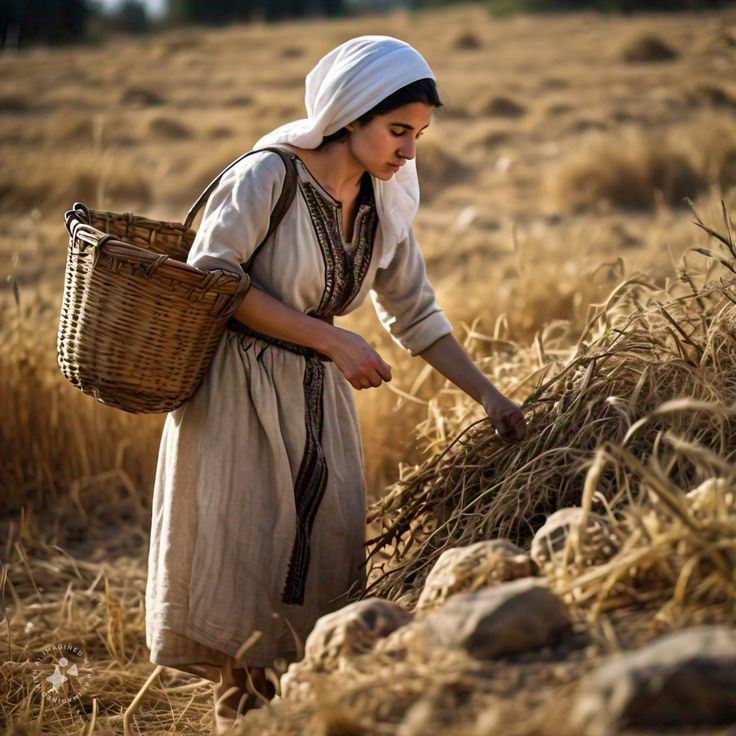
As Ruth stayed with Naomi she would gleam grain behind harvesters so she could find favor with someone. She found favor with Boaz a family redeemer. Naomi then helped Ruth by telling her how to act around Boaz. Boaz thanked her for pursuing him and not other men and commended her kindness. She lay at his feet overnight and he sent her home in the early morning with more barley. Ruth told Naomi about the news and they were very happy. After Boaz saw how good her character was he went to find out if he could redeem them. He found a relative who could redeem her but he could not due to his inheritance. So Boaz was able to redeem Ruth. He was protective of Ruth and treated her very well. He gave her food to take to Naomi to provide for her. Boaz and Ruth married and God blessed them with a son.
At a bible study once they gave us little sheets of paper that said “I want a blank faithfulness like Ruth and a blank faithfulness like Naomi”. I wrote “Unconditional” for Ruth and “Selfless” for Naomi. They loved in a way I wish all people did. I wonder if their harsh situation brought more love and joy into their lives when they realized what truly matters. Adversity often produces resilience.
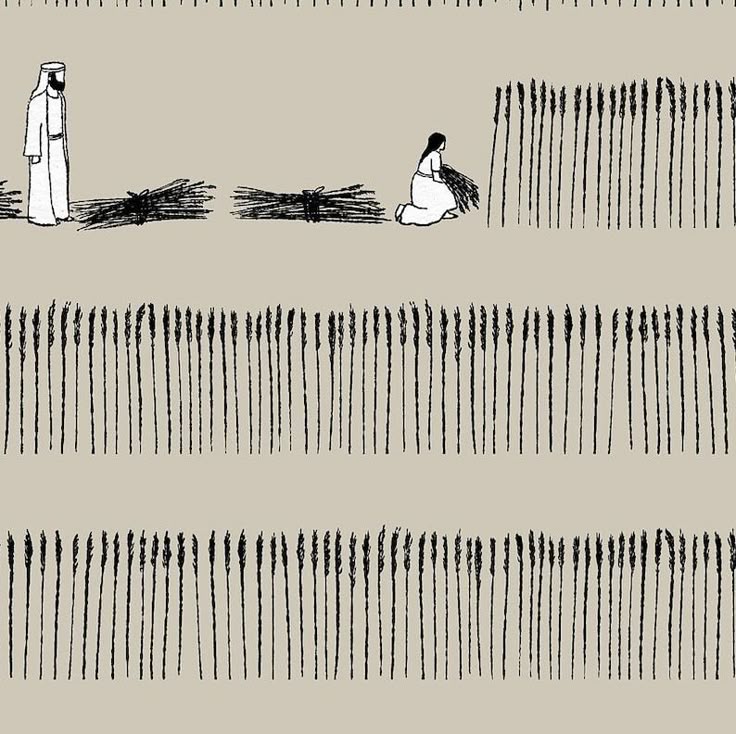
Ruth’s virtues are ones I strive to have. Loyalty, love, forgiveness, dignity, resilience, care, and cunning. She is a wonderful woman with a meek nature and a strong will. Her willingness to step outside of shame and receive a new reality is inspiring. When she was waiting for God’s goodness to prevail, she was found working hard for her family in the fields. There were plenty of things going through her head about her situation that we never get to know, yet we see how despite any fears she might have she does what she needs to. Her decision to obey, listen, trust God, and be her best self led to her having a family, a son, a family redeemer, and helping Naomi to a better sustained life. Ruth is also part of Jesus’ lineage through their son Obed. Her decision to live a life with the Lord instead of her life back home which could’ve been more comfortable, put her in relation to Jesus, the son of God who died for our sins. What a miracle.
It goes to show that our virtues can change our lives for the better in big ways. Small decisions can lead to big consequences. I am so glad we have such a faithful God that he does not forget the Ruths, Boazs, and Naomis of the world but rather blesses them with abundance and joy. Our God is overflowing with goodness and love, I cannot wait to celebrate this goodness in heaven forever. I hope to have a love like Ruth’s and a faith like Naomi’s. I pray you do too. My question for you today is, who are you gleaming from? When God looks to favor you, will he find you working or complaining? Will you be faithful like Ruth and Naomi?
Like the Proverbs 31 woman, Ruth is feminine, grounded, trusting, diligent, and hard-working. Her reliable personality landed her a brand new life from God. Her hardships helped shape her destiny and provided life to multiple people. Like I said, I love Ruth! Thank God for such an inspiring story about a woman.


 Homesteading Honey